Sunday, July 14, 2013

July 14-20 American Beauty Berry

This week be sure to enjoy the Callicarpa Americana — otherwise know as the American beauty berry.

This shrub is found as you enter the Community Building on the Medford Campus in the garden on the left hand side of the entry.   

The small pink flowers that you see, will yield clusters of distinctly colored berries in the late summer and early fall season.  The berries provide a wonderful source of foods for birds in the fall and into the winter season.

Monday, July 1, 2013

July 7-13 -- MILKWEED

This week—a focus on Native Plants:  You may want to investigate the Asclepias, otherwise know as Milkweed.  This is a herbaceous perennial, which provides an important nectar source for bees and other nectar-seeking insects. 
In addition, Milkweed is the host plan for the Monarch butterfly, that we all enjoy, which means it is the only plant the female Monarch will lay its eggs on.   Having Milkweed on our Campuses helps the Monarchs tremendously.
On the Medford Campus, you can see Milkweed plants at the intersection of Medford Leas Way and Estaugh Way, and on the Lumberton Campus, these plants are found in the Meadow.

Saturday, June 29, 2013

Orange Trail

Bill, Gil, and I walked around the Orange trail with clippers and loppers getting rid of the catbrier that was on or nearly on the trail.  Catbrier has done very well in the rainy spring.     The first photo is of Jewel Weed which I learned is a naturalist treatment for rash -- especially poison ivy
http://en.wikipedia.org/wiki/Impatiens#Medicinal_uses_and_phytochemistry  uses the word "alleged" goes into some detail with reports of studies, pro and con.
On the Yellow Trail #  we saw a patch of ground pine (Lycopodium dendroideum). 
We saw  some of the "black stuff" which results from the fungi that grows on the "honeydew" of the beech blight aphid -- http://en.wikipedia.org/wiki/Beech_blight_aphid -- We'll be watching for dancing aphids this fall.
A few yards upriver from the Spanish oak that fell across the creek during Hurricane Irene there was new fallen tree blocking the waterway.

Jewel Weed

Dragon Fly

Ground Pine

The Spanish Oak that was taken down by Hurricane Irene is at the left -- the top half of that tree was removed so that canoes and kayaks can pass, but a branch extends down into the creek and holds therest of the trunk in place.  Center bottom is the horizontal  trunk of another fallen tree I'd not seen before. The foliage filling the right third of the picture is from a branch that sticks up vertically.   Are the leaves green because the tree is alive or because it recently fell?  In either case, the creek seems to be blocked.


June 30 to July 6 Court 11


COURT 11 - Korean Stewartia

As you are outside this week, please stop at court 11 on the Medford Campus and enjoy the Korean Stewartia which is just coming into the bloom.  The white flowers with yellow stamens offer a long period of bloom from the end of June into July.


Lots of buds-- Better photo in a few days.


Wednesday, June 26, 2013

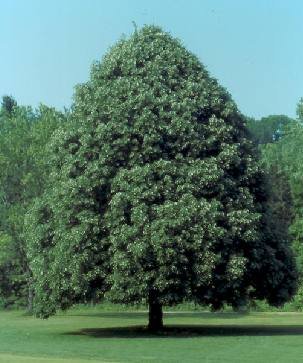
June 23 to June 29 - Linden Trees


Over the next several weeks, visit Parking Lot A on the Medford Campus to enjoy the grouping of Silver Linden Trees. This particular tree is known for its clusters of creamy yellow, fragrant flowers, as well as the unique shading of the leaves which feature deep green on one side, with silvery undersides. 


Sunday, June 16, 2013

June 15 Meadow Wildflowers

The album of photos from this walk are here. 

 Various ways to view, the one that let's the links in the captions work is to click on the first photo in the album,  and then use the next (or back) arrow that appears when you mouseover the rectangle on the side of the photos.

Lots of coriopsis, milkweed and dogbane, but I didn't take photos because I knew them.
milkweed is the same genus as butterfly weed
http://mlra.org/wildflowers/flowers/Asclepius_syriaca.htm
http://en.wikipedia.org/wiki/Asclepias_tuberosa  milkweed should be added to the wildflower site
http://en.wikipedia.org/wiki/Apocynum   that's the genus for dogbane.  I don't know what species we have. Dogbane is not on the wildflower site either.

We also saw a small white violet.  I think it was a field pansy.  These are the violets that Rudy Salati identified at Medford Leas.  http://mlra.org/wildflowers/flowers/sixViolas.htm


Judy (standing), l-r  seated: Marilyn, Paul, Ann, Bill.  photo by Maggie

Thursday, June 13, 2013

Ralph's photos taken at  Medford Leas.

I have been remiss in not placing Ralphs photos of Medford Leas on this blog.   I started out recreating them here so that visitors would see them without the extra step of a link.   But I realize now it's best to just provide the links.

So this is catching up with the  Medford Leas posts on Ralph's Blog.


May 3, 2013  Spring Springs

March 3, 2013 Sprng Blooms, Rapids  and Reflections

February , 2013 -- Two posts:  February Snow -- Weren't you out in it this morning?  and a second post with a deer on the Red Trail behind Ralph's Bridlington home.

June 12, 2012  -- The Resurrected Meadow

Wednesday, June 12, 2013

Jane Bourquin's Photos

Jane Bourquin Photos

Two years ago I copied these photos from Jane's Computer.   Wonderful wonderful.

 I will visit her and get captions for all of them.

(I don't know why the titles of posts aren't working anymore) 

Sunday, June 2, 2013

Cathedral Trail & Kreibel Way

Two Shady Trails were appropriate for Saturday, June 1, a very hot and humid day.   Perry was working in the farm despite the heat and told us about the raised beds, cover crops, and so forth.   Maggie took group photos on Cathedral Trail and Kreibel Way.   This fuzzy seed pod was interesting.  We need to ask Jane what plant produced it.
Cathedral Trail
Kreibel Way

mystery seed pod


Tuesday, May 28, 2013

May 18 Wildflower Walk

The weather was nice,  the Wild Geraniums were in bloom; there were five people and one dog. We picked up the red trail at the parking lot (Ranunculus, Solomon Seal), hen  took Yellow Trails #12, #11, and #10 to see the Island (False Solomon Seal, Trillium, and May Apple), Pebble Run (Lesser Celandine is gone now) and the stepping stones down to the Dock.  The we went up the road (Money Plant) to the red trail (Wild Geraniums), back on the road behind Karen's house (Sweet Pea, Wild Azalea),  The labelled, commented photographic record of this walk, located on a  Picasa Album called  2013May18WildflowerWalk,  shows the other wildflowers seen on this walk.  I think I like this new system.  One or two photos for the blog, and the photographic record elsewhere.


Bill Brown, Judy Kruger, Mary Sharp, Karen Sannwald and Taco.
photo by Maggie Heineman, link to bigger photo

Wild Geraniums

Sunday, April 21, 2013

Spring Creek Cleanup at Lumberton


-- email from Judy Norcross:

with rick, and a scout leader in a canoe and my friend karen and i in 2 kayaks, we inspected the local waterways and marshes for any trouble spots and were amazed at how well last year's cleanup has lasted.  i think i will need to revisit this in the fall to keep the waterways open. beavers are very happy in the rancocas and we saw about 6 lodges in a 2 mile area.  we also saw a beaver swimming into the marsh. the damage is quite minimal and should not cause worry. we are so fortunate to have this lovely resource.


Saturday, April 6, 2013


Finally Spring.  

After two postponements the first wildflower walk of the season was April 6.
 In 2012 we saw  Bloodroot and Skunk Cabbage  a month earlier
http://medfordleasarboretum.blogspot.com/2012/03/march-17-wildflower-walk.html

This  year March was a  bust.  Only the Lesser Celendine came early.    There were five of us:  Anita Solomon, Karin Sanwald, Barbara Trought, Mary Chisholm-Zook and me (Maggie Heineman).    We started down the ramp near the theater, passed by the bridge to the "Island"  -- which wasn't an island - quite dry in fact.   Skunk Cabbage was starting, but not as abundant as it will become. It was young.  Later in the walk we did see some with the emerging dark red spathes which surround  the spherical flower heads, the spadix.   As expected we saw plenty of Lesser Celendine which are especially attractive in the stream bed of Pebble Run.  Bloodroot was in bloom.  Anita identified the bushes coming into bloom as Spice Bush, Lindera benzoin. It seems that we saw quite a bit of Trout Lily coming up-- not in bloom. Karin said it was Trout Lily and  I was skeptical because it was so abundant.  However,  looking at photos of Trout Lily leaves, Karin was  right.   Barbara spotted some Trillium - not in bloom. Mayflower was coming up, only about 4 inches high today. We saw a lot of something  with chrysanthemum-like leaves.  Not mugwort, I'm guessing that it was  Herb Robert (Geranium robertianum) which is another early invasive.  See photos in that March 17, 2012 post that is linked above. Not sure because there were no flowers.

 I didn't  take photos of the plants which we all could recognize.  Instead what follows are  the photos of plants-  not yet in bloom - which we were curious about,  These pictures are for Jane Bourquin and for anyone else who can tell us what we saw.  We followed the Red Trail and then took  the cut-off that leads to Meditation Garden where the Hellebore is in bloom (it's also in bloom at the Atrium.
Two lovely Magnolia Trees were in bloom in Court 2.  Neither Anita nor Mary had seen Court 7, so we stopped by there, and then again at Court 4 where Betsy Snope took the photo of our group.

With Spring Beauty coming into bloom soon, and maybe Trout Lilies, plus our various mystery plants, we decided we really must have another Wildflower walk this month.   It's not on the monthly calendar  but it will be on the weekly calendar.   Tuesday,  April 23 at 9:00.  Dog show at 11:00.
Barbara, Maggie, Anita, Mary, Karin and Taco


Internet photo of the  Skunk Cabbage's spherical spadix  with flowers, inside the leaf-like bract called a spathe
this is my favorite page about skunk cabbage:
http://natureinstitute.org/pub/ic/ic4/skunkcabbage.htm
Lots of Trout Lilies?  Note the mottled leaves 


Internet photo of Trout Lily - mottled leaves 
Mystery bulbs - leaves flat like Iris, snowdrops leaves are different. 

Red mystery plant
Spice Bush starting to bloom.  A nice page about spicebush
http://www.radfordpl.org/wildwood/today/Plant_Spp_pp/Spicebush.htm
Scouring Rush -- see the comment below this post.


Sunday, September 16, 2012

Persimmons and More

This post, and the three that follow, describe the September 15  Rushmore Wildflowers Walk, which started with at Persimmon Grove and ended at the Pawpaw Patch.  In between we looked at the Sandy Run Ditch, which has volunteer wildflowers, and then Ro's garden, which has planted wildflowers.  Jane Bourquin and Ro Wilson led the walk and identified the plants.
Dick Webster, Ro Wilson, Karen Sannwald (with Taco her Chijuajua),  BJ Tetlow, and Peg Scott pose for photographer Maggie Heineman.  Jane Bourquin, wildflower and mushroom expert,  arrived a few moments later and the walk began.
Dick Webster with persimmons. The ones that had fallen to the ground were ripe and sweet.

Boneset


Goldenrod was in bloom.   Ragweed is bad. Goldenrod is good , but has a bad reputation because it blooms at the same time as Ragweed.
 

Wild Primrose has yellow flowers


Sandy Run Ditch

 A small swampy area near the Persimmon Grove provides the headwaters for Sandy Run.  First the water goes into a ditch that runs  parallel to the Rushmore road. The ditch then disappears where the water is channeled down to a culvert that runs under Medford Leas Way and then emerges as as a small creek, Sandy Run, which flows through the woods and eventually empties into the Rancocas Creek (between the Tulip Poplar Grove and Yellow Trail #7).   As the map shows, Sandy Run goes through two culverts and under three bridges between the Rushmore ditch and the Rancocas Creek. 

To some the ditch is full of weeds.  Others see it as an excellent habitat for wildflowers, birds, butterflies and insects.  


Mostly boneset and goldenrod
Jane's cane becomes a seat.
Ro and Jane with tricycle, car, and seat-cane. Wild cherry in the foreground.. 
Grasshopper
Mystery bush with pretty flowers and invaded by grape vine.
BJ and Herry Tetlow have since removed the vine from this lovely bush. 
Knotweed
Where the mower won't go
There the trees will grow
Wild Cherry

Lots of Ageratum
The bees don't have far to fly to reach a ditch of full of wildflowers. 
After filling one bag with ragweed, Maggie gave up.  About 80% of the ragweed is still there.


Ro's Garden

Ro doesn't like lawn.  
Ro doesn't approve of lawn. 
Ro doesn't have lawn.  
Ro has a wildflower garden that attracts bird, butterflies, visitors and rubber snakes. 


Ro's lawnless garden is wild and  full of good things.    It is a  wildflower garden for birds, butterflies and hummingbirds  in a postage stamp.   To be added: photos of the goldenrod and black coshoh-cincomfuga. (spelling? -- circumfuga?)
Fennel - a host plant for black swallowtail butterflies
(non-native) Lemongrass - with rubber snake
Night-blooming Jasmine
non-native, with a wonderful fragrance

A monarch chrysalis dangling from a leaf.
When caterpillars hatch, Ro saves them from predators by placing them in a terrariam with this screen top.  

She feeds them and eventually each one attaches to the screen and forms a chrysallis.  

Next to Ro's thumb is a catepillar (green and black) which has not yet formed its chrysallis. 

Paw Paw Patch

At Ro's instigation there will be a paw paw patch between Kriebel Trail and Ro's house.   There are several plants with this name, but undoubtedly the one Ro had planted is Asimina triloba, which is native to this area.  That Wikipedia page tells all about paw-paws, including this rhyme 

Pickin' up pawpaws, puttin' 'em in your pocketPickin' up pawpaws, puttin' 'em in your pocketPickin' up pawpaws, puttin' 'em in your pocketWay down yonder in the pawpaw patch

Wikipedia explains that  "picking up pawpaws" refers to gathering the ripe, fallen fruit from beneath the trees, and that the "pocket" in the song is that of an apron or similar tie-on pocket, not a modern pants or blue jeans pocket, into which pawpaws would hardly fit.A "pawpaw patch" refers to the plant's characteristic patch-forming clonal growth habit.

The six trees that Ro had planted are a few feet apart, but hey seem healthy and with the clonal growth habit, we can look forward to a real patch in the future. 

Ro with one of the paw paw trees


Large Canna grow along the back of Ro's home